

Canada officially joined the Hague Apostille Convention on January 11, 2024, simplifying international document recognition by replacing the multi-step legalization process with a single apostille certificate for member nations. Under the Canada Apostille Convention Ontario 2024 changes, residents can now secure these certificates through Official Document Services in Toronto or Global Affairs Canada; however, traditional authentication and legalization still apply for countries not participating in the convention.
Before January 2024, navigating the multi-step authentication and legalization process felt like an endless bureaucratic maze for anyone in Ontario. While Canada finally joining the Hague Apostille Convention promised simplicity, the reality for many residents has been a wave of rejected documents and missed deadlines. Understanding whether your paperwork belongs at Official Document Services in Toronto or Global Affairs Canada in Ottawa is now the most critical step in the process. Mistakes here lead to significant financial loss and legal delays; the rules have changed, and old methods no longer apply. In this guide, we clarify the post-2024 landscape by identifying the five most common errors Ontario residents make. You will learn exactly how to navigate the new jurisdictional rules. We will also outline specific notary requirements for the GTA and provide realistic processing timelines for 2025 and beyond.
The 2024 Transformation: Why Canada Joined the Hague Apostille Convention
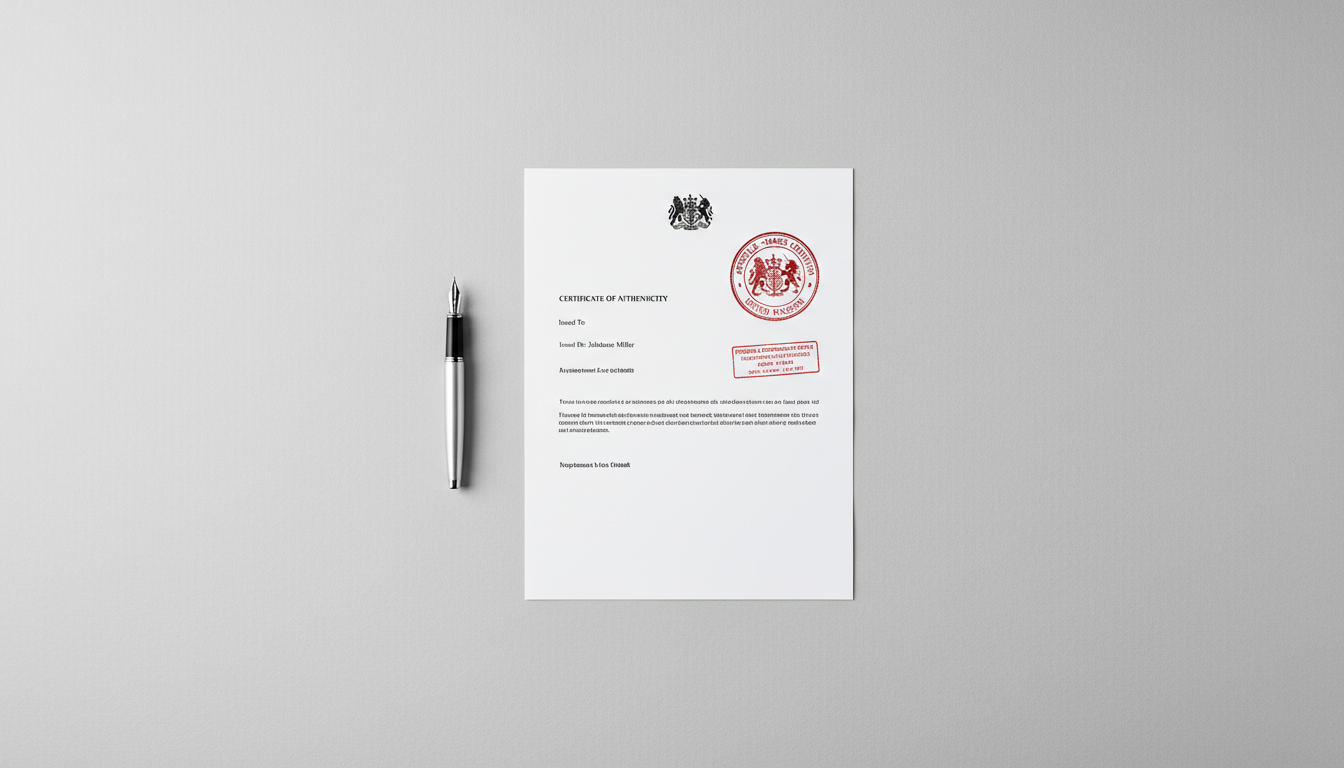
The landscape of international document validation shifted fundamentally on January 11, 2024. This date marked Canada’s formal entry into the Hague Apostille Convention, a milestone that streamlined decades of bureaucratic hurdles. Understanding the Canada Apostille Convention Ontario 2024 changes is essential for anyone handling cross border legal matters. Prior to this, Canada relied on a multi layered process known as authentication and legalization. Under the old system, a document first required authentication from a government body, followed by a separate legalization step at the destination country's embassy or consulate. This chain was often plagued by long wait times and unpredictable requirements.
The Hague Apostille Convention, a multilateral treaty established in 1961, was designed to bypass these inefficiencies. By joining, Canada now issues a single, standardized certificate called an apostille. This one step verification is recognized by more than 120 member nations, eliminating the need for further diplomatic or consular legalization. It simplifies the movement of public documents such as birth certificates, marriage licenses, and academic transcripts across international borders.
For residents in the Greater Toronto Area, this means a faster path for personal and corporate documents. Instead of navigating the specific, often changing requirements of dozens of different embassies, a single stamp from the competent provincial or federal authority suffices. While the entry was late, it significantly reduces the logistical burden for those seeking same-day apostille solutions. However, the transition has introduced new administrative nuances, particularly regarding which office holds the authority to issue these stamps within Ontario’s borders, a detail that remains a point of confusion for many applicants.
ODS vs Global Affairs Canada: The Most Common Ontario Mix-up

The division of authority is the most frequent source of delays for applicants in the Greater Toronto Area. Since the Canada Apostille Convention Ontario 2024 changes, responsibility is split between the federal government and provincial authorities. Sending a document to the wrong office often results in a total rejection, forcing the applicant to restart a process that may already be time sensitive.
Official Document Services (ODS), located at 222 Jarvis Street in Toronto, is the primary authority for documents issued by the province. This includes vital statistics such as birth, marriage, and death certificates, as well as any private legal document notarized by an Ontario notary public. In contrast, Global Affairs Canada (GAC) in Ottawa remains the competent authority only for federal documents, such as RCMP-issued background checks and federal agency certifications.
Authority | Jurisdiction | Common Document Types |
|---|---|---|
Official Document Services (ODS) | Provincial (Ontario) | Birth/Marriage certificates, Ontario notarized documents, diplomas |
Global Affairs Canada (GAC) | Federal (Canada) | RCMP checks, federal government letters, international trade documents |
Applying to the federal office for a document that falls under provincial jurisdiction is a costly mistake. GAC will typically refuse to issue an apostille for a provincial document, leading to weeks of lost transit time. For those requiring same-day apostille results, knowing exactly where your document originated is the first step. For example, a power of attorney prepared for Brampton apostille services or a corporate resolution for Mississauga apostille processing must be routed through the ODS office in Toronto because these documents are notarized by provincial notaries. Submitting these to Ottawa instead of Jarvis Street often leads to the document being returned with a form letter stating the office lacks jurisdiction, a setback that can derail urgent business or travel plans.
5 Critical Mistakes Ontario Residents Still Make in the Post-Convention Era
Navigating the jurisdictional split between ODS and GAC is only half the battle. Even when documents reach the correct office, technical errors frequently trigger immediate rejections, causing applicants to miss critical deadlines. Since the Canada Apostille Convention Ontario 2024 changes took effect, five specific mistakes have become the primary reasons for document failure at the Jarvis Street office in Toronto.
Laminating Original Documents: This is perhaps the most irreversible error. Lamination makes a document legally ineligible for an apostille because the physical certificate or stamp cannot be permanently affixed to the paper fibers. If a birth or marriage certificate is encased in plastic, ODS cannot process it, and the applicant must order a fresh replacement from ServiceOntario before proceeding.
Submitting Photocopies or Scans: An apostille validates the original signature and authority on a document. Submitting a home printed scan or a standard photocopy is a guaranteed way to receive a rejection. Unless the document is a 'Certified True Copy' specifically prepared and sealed by an Ontario notary, only original, wet-ink documents are accepted for provincial authentication.
Misunderstanding Country Eligibility: While over 120 countries recognize the new system, significant global players such as China, the United Arab Emirates, and Vietnam are not members of the Hague Convention. For these nations, the old authentication and legalization chain remains mandatory. Many residents mistakenly assume the 2024 changes simplified the process for every destination worldwide, which can lead to documents being rejected by foreign authorities even if an apostille was incorrectly obtained.
Skipping Notarization for Private Papers: Official government certificates often go straight to ODS, but private papers like Powers of Attorney, corporate resolutions, and university diplomas require a preliminary step. They must be notarized by an Ontario notary public to verify the signatures before the province will grant an apostille.
Incomplete Multi-Page Files: ODS requires that multi-page documents, such as complex contracts or full academic transcripts, be complete and properly bound. Missing a single page or submitting a file where the notary's seal does not clearly transition across all pages can lead to a rejection.
Avoiding these pitfalls is essential for anyone seeking same-day apostille services to ensure the document is submission-ready the moment it reaches the processing counter.
Do I Need a Notary? Pre-Apostille Requirements in Brampton and Mississauga
Determining if a notary public is required is the primary technical hurdle for residents seeking Brampton apostille services or Mississauga apostille processing. The necessity of a notary depends entirely on the document’s origin rather than its destination. Under the Canada Apostille Convention Ontario 2024 changes, the province issues an apostille only if it can verify the signature on the page. If the document is a private instrument, such as a Power of Attorney, a corporate resolution, or a personal affidavit, it lacks a recognized government seal. Therefore, an Ontario notary public must first witness the signature or certify the copy. This notarization acts as the essential bridge; Official Document Services (ODS) verifies the notary’s standing and then issues the apostille based on that official’s commission.
Public documents follow a different path. Original, long-form birth, marriage, or death certificates issued by the Province of Ontario generally do not require notarization. These documents already bear the signature of the Registrar General, which is already on file with ODS. Submitting a notarized copy of these certificates can often complicate the process, as many receiving countries demand the original government-issued version rather than a secondary reproduction.
Document Type | Notary Required? | Authority Level |
|---|---|---|
Birth/Marriage Certificates (Original) | No | Provincial Government |
Power of Attorney / Wills | Yes | Private / Notarized |
Corporate Bylaws / Resolutions | Yes | Private / Notarized |
University Diplomas / Transcripts | Yes | Educational / Notarized |
RCMP Criminal Record Check | No | Federal Government (GAC) |
For those managing corporate or legal affairs in the GTA, failing to secure a proper notarization before submitting to ODS is a frequent cause of avoidable delay. Ensuring your private documents are signed and sealed by a commissioned notary public in Ontario is a prerequisite that must be satisfied before any same-day apostille can be issued.
Ontario Apostille Costs and Processing Timelines for 2025 and 2026
Official Document Services (ODS) maintains a tiered fee structure for residents across the Greater Toronto Area. For the 2025 and 2026 calendar years, the standard provincial fees are $16.00 for each document notarized by an Ontario notary and $32.00 for each original government-issued certificate. These fees are mandatory and payable directly to the Minister of Finance when processing at the Jarvis Street office in Toronto. While the financial cost is straightforward, the variable that most impacts applicants is the processing timeline.
Document Type | ODS Official Fee (Per Document) |
|---|---|
Notarized Private Documents (Power of Attorney, Diplomas, Affidavits) | $16.00 |
Government-Issued Certificates (Birth, Marriage, or Death Certificates) | $32.00 |
The administrative shifts following the Canada Apostille Convention Ontario 2024 changes have resulted in a significant volume of applications, often leading to backlogs. Standard mail-in processing through ODS can currently take several weeks, not including the transit time for couriers. For individuals in the GTA facing rigid deadlines for international real estate closings or expiring work visas, this delay can jeopardize legal standing. Utilizing professional Brampton apostille services or Mississauga apostille processing offers a strategic advantage. By managing the in-person submission process, these services facilitate a same-day apostille turnaround that bypasses the unpredictable mail-in queue, ensuring documents are ready for international use without the risk of long-term government processing delays.
Navigating Urgent Document Needs in the GTA
Time-sensitive legal obligations do not align with the standard mail-in queues of Official Document Services. For residents facing immediate deadlines, such as an international real estate closing scheduled for next week or a work visa that expires in forty-eight hours, the weeks-long wait for a mailed response is not a viable option. These high-stakes scenarios require a move away from the DIY approach to ensure that the document satisfies the requirements of the Canada Apostille Convention Ontario 2024 changes on the first attempt.
Local expertise in the Greater Toronto Area allows for a level of precision that remote applications lack. Using Brampton apostille services or Mississauga apostille processing ensures that common errors like unverifiable notary details or missing pages are caught before submission. For those requiring a same-day apostille, professional handling provides a buffer against administrative rejections. By navigating the counter service at the Jarvis Street office directly, experts can secure a next-day turnaround; this bypasses the unpredictability of the provincial mail-room and protects your international interests from costly delays.
Canada's transition to the Hague Apostille Convention has streamlined the document authentication process, yet many Ontario residents still find the overlapping provincial and federal regulations confusing. Navigating these recent changes correctly is vital for ensuring your documents are accepted abroad. If you would like expert assistance to manage these requirements on your behalf, our team is ready to help. For a deeper look at the updated procedures, feel free to consult our Apostille Guide; it offers the detailed insights necessary to ensure your paperwork is processed without any avoidable delays.